
Difficult Bitch
On truth, trouble, and the women, femmes, and thems who refuse the script.

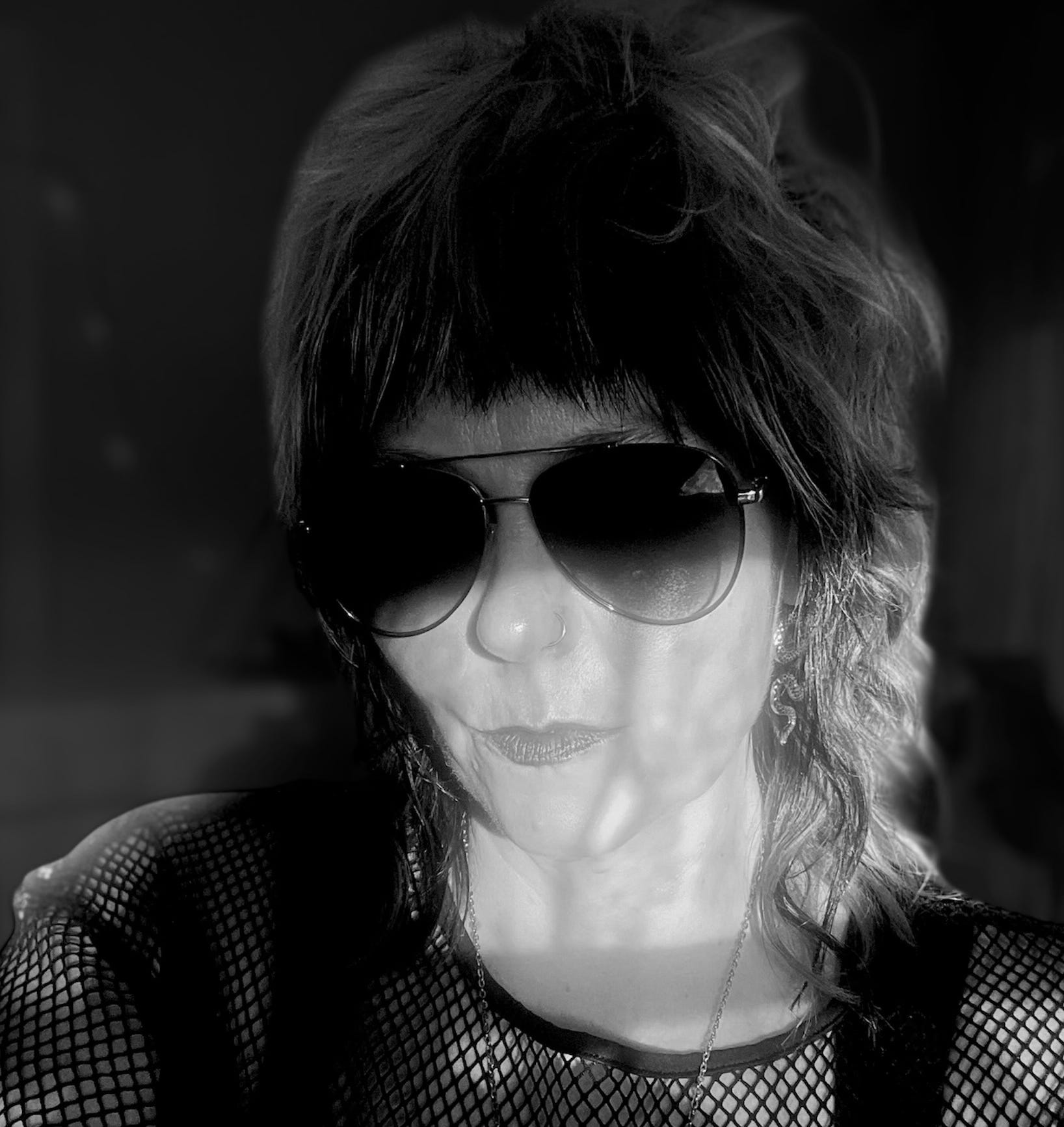
I was nine years old when I first learned that asking the obvious question with enough insistence could get you cast as the problem.
It was right before Thanksgiving, which meant school was doing what American schools do best around that time of year: dressing up conquest as a lesson, feeding children a soft, patriotic fairytale about settlers and “Indians”, and calling it history. My class was talking about Christopher Columbus and Native people and some version of how the settlers came and took care of them. I remember sitting there, listening, and feeling something snag. The story didn’t fit together. Even at nine, I could feel the seam coming apart in my hands.
So I started asking questions.
If this was their land, how did it become ours. If the settlers came and took care of them, where were they now. Why were they on reservations. What did that mean. How do you take a people’s land and then put them somewhere else and still call that help.
I was genuinely confused.
So I kept asking because no one was answering. Or rather, they were answering in that way adults do when they want the shape of an answer to stand in for the truth. The teacher kept trying to move on, and I kept pulling us back. I wasn’t trying to be disruptive. I was trying to understand.
At some point I started getting upset, talking fast, interrupting, and not backing down. I could feel the lie and no one else seemed interested in touching it. The more I pressed, the more I became the issue. I got sent to the office for insubordination. It was the first time I got sent out for insubordination. It would not be the last.
That part stayed with me. Not Joey M. in the back of the room acting like a little tyrant, spinning spitballs and causing actual chaos. He stayed put. I was the one who got removed. The socialized girl asking moral questions about theft and displacement was the disruption. The boy being a menace was just part of the scenery.
Then my mom picked me up from school, and somewhere in that car ride the message got sealed into place. Why do you have to be so difficult, Alexandra? Why can’t you just sit there, do what you’re supposed to do, and stop asking so many questions?
I remember trying to explain myself. I have questions. She isn’t answering them. I remember knowing I wasn’t making trouble for the sake of it. I was trying to get someone to tell the truth because what I was being told did not makes sense. But by then the verdict had already landed. Difficult. That word found me early.
That Christmas, determined to get answers, I asked for a set of encyclopedias. I thought maybe somewhere in those volumes, in all that authority and all those thin pages, somebody would explain what no one in my classroom could explain. Instead I found the same story. The same omissions. The same polished lie. I remember the disappointment of that and thinking maybe I had gotten it wrong. Maybe I really was just difficult and the problem was me.
Looking back, I can see what was happening much more clearly. I was a child encountering the official story of America and feeling, in my body, that it was rotten. I did not have the language for settler colonialism. I did not have the language for mythmaking, erasure, or power. I had a nervous system that could feel incongruence, and a mouth that kept following the thread. The punishment came fast. First from the institution, then from home. That is how girls learn. Ask a question that makes the room too honest, and somebody will hand you a personality flaw to carry instead.
This is the deeper truth inside that old accusation. Difficult was never a description. It was instruction. It meant stop pressing. Stop noticing. Stop making other people account for the story they are telling. Learn how to sit in the lie without moving.
That was one of the first times I understood that people do not call girls and women difficult because they are hard to understand. They call them difficult when they make it harder for others to stay comfortable inside contradiction.

Once a girl gets named that way, the word starts traveling with her. It leaves the classroom and settles into her timing. It enters the pause before she speaks, the quick assessment of whether this room can bear reality, the tiny calculation around how much of herself she can bring forward before the mood shifts and someone decides she has spoiled something. By the time I was grown, I had already spent years watching how easily femme perception gets recoded as attitude, and how fast honesty can be treated like a breach of manners.
I understood, long before I had the language for it, that there was a premium placed on being easy. Easy to teach, easy to date, easy to invite, easy to fuck, easy to recover from after a hard day. Easy meant your presence did not require anybody else to reconsider themselves. A woman could be bright, attractive, intelligent, even strong, as long as that strength stayed arranged in a pleasing shape. She could have opinions, as long as they did not force a reckoning. She could speak, as long as her tone kept the furniture from rattling.
I learned that lesson in so many ordinary ways it became the air I breathed. Whole social worlds are built on women and femmes absorbing strain before it reaches the surface. A room starts tilting, and a woman steadies it. A man says something careless, and a woman translates it into something more workable. Tension gathers, and a woman becomes the buffer. This gets called maturity, communication, grace, emotional intelligence, politeness. Let’s call it what it actually is: unpaid maintenance repackaged as virtue.
Most of this training happens in the most everyday places. Dinner plans. Group texts. A look across the table when you say you want something different. The tiny pause before you admit you do not like something, do not agree, do not want to go along just because everyone else already has. Difficulty often begins there, in the everyday moment when a woman stops making herself convenient.
That old accusation stayed close because it carried a warning: people like you more when you help them stay untouched. They praise your depth when it stays interesting and police it when it asks something of them. They call you perceptive when your seeing entertains them, then harsh when it lands too close to home. Your capacity has not changed. Its direction has. It stops serving the room and starts exposing it.
By the time I entered relationships with men, I already knew the shape of the trap, even if I could not have named it so clearly then. I knew there was a version of femininity that made life simpler for them: adaptable, game, willing to let things slide, skilled at sensing what might turn an evening sour and choosing not to bring it up. She had concerns, certainly, though she delivered them in portions small enough to be absorbed without much rearrangement. I could play that role. Plenty of femmes can. It is one of the first performances we are handed, and most of us become skilled at it because the rewards come fast: warmth, approval, desire, protection, inclusion, fewer consequences.
The cost always shows up later.
It shows up the first time something matters enough that you stop curating yourself and say it matter of fact. It shows up when you bring disappointment, or anger, or a pattern you can no longer pretend not to see, into the middle of the relationship and wait to see whether the other person can remain present without turning your honesty into a character issue. That moment tells you almost everything. Up to that point, plenty of men are very comfortable with a woman who seems thoughtful, self-aware, direct, expressive, alive. The climate changes when her interior life arrives with weight, memory, and demands of its own. Then all the old training around femme obedience comes flooding back.
In my last relationship with a man, I hit that wall again and again. I would try to talk about what was happening between us, what I was noticing, the impact something had on me, and the conversation would slide away from the substance of it toward my delivery, my seriousness, the fact that I had brought it up at all. There was always an undertow pulling toward minimization and deflection. Why does this have to matter so much? Why can’t this stay simple? Why does everything have to become a conversation? Why do you have to make things so heavy? The wording changed. The message did not.
What made it so disorienting was that I was coming toward the relationship, not away from it. I was trying to make contact inside the same reality, asking for the kind of closeness that can bear complexity and still remain standing. From his side, that often landed as an imposition, as though my refusal to step over what felt important had created the difficulty rather than exposed it. That reversal can make a woman feel crazy. She enters the room with a concern and leaves carrying the charge of having made it unpleasant.
After enough repetitions, your body starts bracing before the conversation even begins. You begin measuring your words in advance. You edit your own emphasis.
Maybe I should bring it up later. Maybe I should phrase it more gently. Maybe I should start with reassurance. Maybe it’s not that big of a deal. Maybe I should make clearer that I am not attacking him. A woman can spend years becoming exquisitely articulate inside this arrangement and still be punished for the basic fact of having a self.
That is one of the crueler pieces of it. Men often say they want honesty, depth, communication, emotional openness, an “independent” woman. Many of them do, as long as those things remain flattering, erotic, or easy to metabolize. A different test appears when honesty places pressure on their self-concept, when depth asks for accountability, when communication carries a consequence they cannot simply talk their way around. Then suddenly a woman’s clarity starts reading as aggression, her steadiness starts reading as coldness, her refusal to abandon the point starts reading as punishment.
I had not yet reached the part of my life where I could name every dimension of that dynamic, but I was already living inside it. The word difficult had matured alongside me. It no longer arrived only as an outright accusation. Sometimes it appeared as impatience. Sometimes as withdrawal. Sometimes as that particular kind of male fatigue that says, without saying, I preferred you when your intelligence made me feel interesting instead of implicated. That is a hard lesson to integrate when you are still hoping love and mutuality might be sturdy enough to hold the truth.
And still, something in me kept refusing to go all the way numb. That refusal cost me. It also saved me.
The shift came later, and it changed everything. Up to that point, I had moved through feminism the way a lot of white women do at first, brushing against the edges of something real while still carrying a framework too fragile to hold the world as it actually is. I had pieces. I had anger. I had instinct. I had enough awareness to know that something was off in the arrangement, though the architecture still stayed blurry around the edges. What I did not have was implication. Then I found Black queer feminist thought, and the floor dropped out from beneath me.
Audre Lorde’s writing hit me like a match in dry grass. Her work carried a force of precision I had never encountered before, and she never once trimmed what she knew to make it easier for others to swallow. Reading her rearranged me. It did not just sharpen what I could see around me. It implicated me, especially my whiteness, inside the very structure I was trying to name. Contact was made and it was game on. All at once, things I had only been sensing came into focus. It was not academic for me. It was recognition, that electric moment when language arrives for a reality you are already living and the fog burns off. Patterns that once felt personal or confusing stood there in full shape.
I was in that relationship then, and once I had language for what I was seeing, I started speaking it. I would talk about patriarchy, whiteness, about the shape of power inside ordinary life, about what I was learning. The man I was with did not meet that opening with curiosity, despite his constant declarations of not being like “other men”. Instead he met it with injury. How do you think this makes me feel, he would ask, in one form or another, as if his discomfort at being implicated mattered more than his participation in the pattern itself.
I brought it to a femme friend wanting a witness. She heard his reaction and immediately moved to protect it. Yeah, that would be a lot for him to hear. That old self-doubt opened for a second, and then I went back to Lorde, over and over, back to The Transformation of Silence into Language and Action, until I could feel the ground beneath me and the fire inside burning again.
After that, I was lit up in a way that made containment impossible. Once I could name the patterns, I started seeing them everywhere. I heard it in the way white people talked about racism as though it lived at a safe historical distance, and in the way white innocence kept getting protected in ordinary conversation. I heard it in casual remarks about men, in the permissions they were granted without anyone noticing, in the labor women were doing all around them while everybody called the whole arrangement normal.
I became the person who brought that into the room.
Sometimes it happened at a holiday gathering, in a room full of white people who wanted to eat their food, make their loaded comments, and still imagine themselves decent. Somebody would say something racist in that familiar offhand register people use when they assume the room belongs to them, and I would interrupt. Other times it was subtler. A conversation would turn, the worldview under the worldview would show itself, and I would name the whiteness of it, including my own. I was never interested in pretending I stood outside the structure. I wanted whiteness in the room where nobody could float above it.
The social cost of that kind of speech can be immediate. You can feel the temperature change immediately. People start looking at you like you have introduced something ugly, when all you have really done is stop helping hide what was already there. This is one of the oldest tricks in the culture. Name the violence and become the disturbance. Trace the pattern and become the problem. Refuse the anesthesia of polite silence and somebody will accuse you of ruining the moment.
By then, I knew that accusation by heart.
What became impossible to ignore was how many people were invested in restoring the old order once I stepped out of it. Men did this, certainly, though what startled me more was how often women joined them. I could describe exactly what was happening in my relationship and still end up on trial for the force of my naming. You’re coming in too hard. He feels attacked. I would bring my reality forward and watch another woman translate the man back into innocence, smoothing his edges, softening his response, asking me to be more digestible, questioning if I was asking for “too much”. The request rarely sounded cruel. Usually it sounded wise. That is part of its power.
I had friends who said outright that I made things uncomfortable. People close to me treated my honesty like the breach, as though saying the thing was worse than the thing itself. Beneath all of it was the same demand: get back in line, Alexandra. Restore the atmosphere. Become manageable again. By then, “nice” had already lost its shine for me. I had seen too clearly what that word often covers. Nice women keep the evening moving. They absorb the hit, redirect the conversation, and smile with their jaw clenched while calling the whole thing generosity. I had no interest in earning that kind of praise.
Difficulty is not a flat category. Race, class, ability, gender, and sexuality location all change what it costs to be seen that way. As a white femme-coded person, I know whiteness buys me room, even as it tries to conscript me into pleasantness, innocence, and social management. The moment I stop offering that labor, it turns and protects itself.
So yes, I’ve made people squirm. White people, especially, because I brought whiteness, mine included, into places where it preferred to remain invisible. I’ve also made plenty of men squirm because I named the gendered bargain underneath their responses instead of taking their self-image at face value. Women too, because my refusal stirred the terms they had been taught to survive inside. After that, correction came fast: concern, irritation, distance, exclusion. Every social world has its ways of handling a femme who will not confuse harmony with truth.
There is grief in that, and I do not want to write around it. It hurts to learn how much belonging depends on your willingness to stay agreeable. It hurts to realize how quickly warmth can vanish once your honesty stops serving comfort. Still, something clarifies. Once you have already been cast as difficult, the old bargain starts losing its pull. You stop trying so hard to package yourself for easier reception. Some people drift. Some rooms cool. What arrives in their place is cleaner than likability: it’s self-respect.

Maybe that is why the dating profile joke keeps making me laugh. I am not knocking anyone who uses dating apps, though you could not pay me enough money to turn myself into a product inside that kind of marketplace. Women and femmes, especially, are expected to package themselves in a glossy language of ease. Easygoing. Low drama. Fun. Flexible. Down for whatever. A profile full of coded assurances that says: I will arrive without friction, and I know how to make myself easy to move through.
Mine would read differently.
Difficult bitch. Comes with standards, pattern recognition, heart, and a spine. Ruins dinner parties by choosing truth over the saccharine little lies everyone else was prepared to swallow. Brings a fork to the soft underbelly of your bullshit and keeps pressing until something honest spills out. Deeply uninterested in your performance of being a “good man” if the actual behavior says otherwise. Has no patience for confusion dressed up as depth or charm used to perfume the rot. Most likely will ask the question that changes the whole temperature of the room. Not available to play nice or entertain tone policing. Invite to meet your friends, coworkers, and family at your own risk. Intense devotion to dark, underground industrial techno that strips the polish right off the bone.
That is the joke, and that is also the point.
Because women are taught to market themselves as an experience that leaves no mark. Pleasant to have around. Pleasing to look at. Adaptable, compliant, emotionally articulate in ways that never become expensive. A woman with too much edge, too much discernment, too much capacity to name what is happening in real time gets treated like bad advertising. She sounds risky, tiring, like someone who might interrupt the fantasy before dessert.
I know how this works because I have lived on both sides of it. I know what it takes to read as easy, the labor of seeming light when you are carrying a full body of knowing, the social rewards that come when your standards are visible enough to impress and buried enough not to threaten. I also know what happens when you stop making that trade. You become harder to place, harder to digest, harder to use, harder to manipulate.
And maybe that is the real turn in this essay. For years, difficult was a word used to punish me. It came with disapproval, isolation, correction, all the small pressures meant to train a femme back into pleasantness. Somewhere along the way, it lost its power to shame me. I began to hear it for what it was: proof that I had stopped volunteering myself as social lubricant for other people’s delusions.
That is what I claim now.
I am difficult for people who expect women, femmes, and thems to carry the tension, swallow the truth, and keep the surface smooth. I am difficult for white people who want to talk about racism without dragging our whiteness into the light. I am difficult for men who find femme intelligence sexy until it starts cutting through the architecture of their fragility and entitlement. I am difficult for anyone who thinks a woman’s relational skill exists to keep the room soft while everyone else stays unexamined.
The world does not need more easy women. It needs women with structural analysis and the nerve to use it like a blade. Women who trust their pattern recognition and decide what comes next from there. Women who understand that so much of what passes for harmony is just silence and a cage. Women who know the social cost of telling the truth and do it anyway.
If that makes me difficult, the title can stay.
Forever difficult,
Alexandra Winteraven
P.S. To my nine-year-old self: they sent you out of the room because you were already dangerous to the story. Radical little fucker. You got this.
Want to sit with this essay and process with other Difficult Bitches? I’m hosting a small affinity space for women, femmes, and thems on May 15, 2026. If you want a room to reflect, ask questions, and be witnessed in, you can register here. Difficult Bitch Salon
Writing note: I draft wide, then forge the final shape to techno. This piece was cut with a set by Annē at RSO in Berlin.
Coming soon: small somatic groups for women, femmes, and thems to build the capacity to notice, interrupt, and choose differently inside internalized patriarchal patterns.
Thanks for reading Exposing Roots.
I’m committed to keeping this space free and accessible for everyone because that matters to me. And if you benefit from the writing and want to support it, there are a couple ways to do that.
You can become a paid subscriber, which helps sustain the time, energy, and heart I pour into this work. Currently offering a 30-minute Zoom call for a chance to connect and ask me anything to all new annual paid subscribers. DM to schedule.
Or, if a one-time gift feels better, you can always buy me coffee. Every bit of support helps me continue tending this space with depth and integrity.
Whether you give financially or not, I’m grateful you’re here. Your presence is felt.
Alexandra Winteraven (they/them) is a queer, nonbinary somatic depth psychotherapist working at the intersection of somatic process, depth psychology, structural analysis, and cultural emergence. Their work focuses on interrupting inherited patterns at the level of the body, where the psyche continues to organize itself despite insight.
They are known for naming incongruence with clarity and care, and for working with people who are no longer able to live inside familiar shapes that no longer fit. Their approach is relational, embodied, and uninterested in performance or bypass. Their work supports internal structural reorganization rather than symptom management, and is oriented toward honesty, the cost of real change, and collective transformation.
If you’re curious about working in a 1:1 somatic depth container with Alexandra go here.
this, this, this. this. I have young memories too. i grew up in rural northern new york, and when i got to middle school, we started playing against schools on “indian reservations.” the level of cognitive dissonance was intense. the more questions i asked, the less sense any of it made. i remember riding the school bus home, confused by the brand new schools and the casinos. the word "reservation". i remember asking my parents and being told indians were lazy alcoholics with a poor work ethic.
it hasn’t been until this past decade that i’ve started to see how so much of what I feel traces back here for me too - the dissociation, the performance, the dismissal of the real problem, the willful ignorance of our very foundation. i thought my marriage had nothing to do with any of this. turns out it has everything to do with it.
adrienne maree brown was my doorway, which then opened me to Audre Lorde, Octavia Butler, and others.
thank you for continuing to talk about this. I'm not stopping either. it’s life-affirming to be in the presence of white people willing to face what’s actually ours. all of this history is alive in what we continue to choose to ignore, overlook, and stay inside of in our relationships. it is ALL DIRECTLY CONNECTED.
As with so many of your pieces, this has landed deeply in my body, Alexandra -- drawing out so many memories and hums of recognition.
I remember being at a birthday party for the child of a woman my father was dating. I want to say I was maybe 14 at the time. The party may have been Disney Princess themed, or it could have been Pocahontas themed, as that was the most recent Disney release in the genre. However the case, Pocahontas came up.
I was raised in the '80s in a relatively progressive county in Virginia that didn't hide the horrors of its "founding" from children and regularly engaged educators from local indigenous tribes to balance out what the schoolbooks didn't name. I meticulously schooled a group of adults at that birthday party on oh-so-many reasons that the film, Disney, the corporate machine (likely not my exact words then, but leaning in that direction) were corrupt, inaccurate, zombifying, racist, sexist, and a betrayal of the history of the lands we were currently standing on. I can remember their faces vividly, and that moment helped cement the awareness for me that I would rarely find myself among allies.
I'm working to make my way back to the courage and conviction that blazed within me for so many years. Your writing inspires a lot in the re-membering. Thank you.